
In a world of typing, tapping, and touchscreens, calligraphy might seem a little old-fashioned, but that is exactly why it is making a comeback among parents in Dubai. Calligraphy classes in Dubai give children a slower, more mindful activity that builds patience, focus, and pride in their own work, skills that are often missing from fast-paced digital learning and quick, disposable screen time.

What Is Calligraphy and Why Teach It to Kids
Calligraphy is the art of writing letters in a decorative, stylized way, using controlled strokes and consistent spacing between each letter and word. For children, learning calligraphy is less about producing perfect artwork straight away and more about the process itself. It teaches them to slow down, control their hand movements carefully, and pay attention to small details, something that is increasingly rare in a world built around quick typing and instant autocorrect.
Key Benefits of Calligraphy for Children
- Improved fine motor control, useful for both everyday writing and other hands-on tasks
- Better focus and patience, since calligraphy simply cannot be rushed through
- A creative outlet that also quietly strengthens core handwriting basics
- A genuine sense of pride and ownership over a finished piece of work
- A calming, screen-free activity that nicely balances a busy school schedule
Because calligraphy blends art and discipline, it appeals to children who enjoy drawing as much as it helps those who need extra support with handwriting fundamentals.
What Happens in a Calligraphy Class
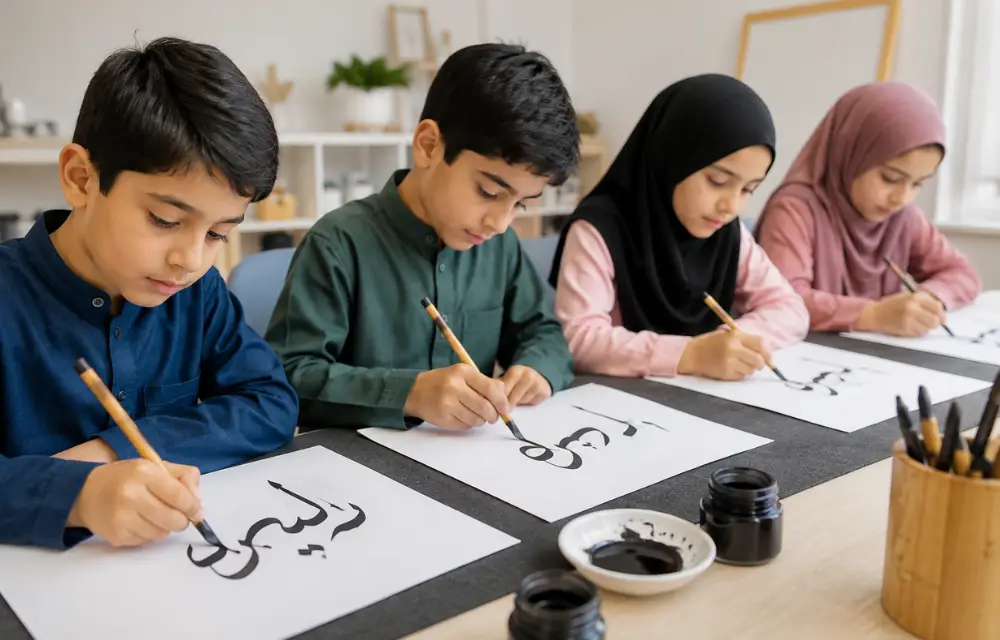
Classes usually begin with basic strokes and simple letter shapes before children move on to full words and small decorative designs. Instructors guide children carefully on grip, posture, and pacing, since calligraphy depends far more on control than on speed. Over time, children start to develop their own personal style and often enjoy creating cards, quotes, or small art pieces using the techniques they have learned in class.
Calligraphy vs Regular Handwriting Practice
Regular handwriting practice focuses mainly on making every day writing neat and legible for school notebooks and exams. Calligraphy goes a step further, treating writing as an art form in its own right, complete with its own techniques and recognizable styles. Many parents find that children who learn calligraphy naturally become more careful and controlled in their everyday handwriting too, since the same fine motor skills apply directly to both.
Why Now Is a Great Time to Start
With the new school year approaching, August is a good time to add a creative, low-pressure activity to your child’s routine before academics pick up again in September. Calligraphy is easy to fit into a weekly schedule alongside other activities, and it gives children a quiet, satisfying skill they can continue building on for years, long after the initial course has ended.
A Skill Children Can Keep for Life
Unlike many childhood activities, calligraphy is something children can continue enjoying well into their teenage years and beyond, whether as a hobby, a creative outlet, or even a small artistic talent they carry into adulthood. Few skills learned in childhood remain quite so usable and enjoyable for so long.
Who Should Consider a Calligraphy Class
Calligraphy suits a wide range of children, not just those who already enjoy art. It works especially well for children who need extra support with handwriting neatness, as well as those who simply enjoy quiet, detailed, hands-on activities. Even children who find sitting still difficult often settle into calligraphy once they see their own progress take shape stroke by stroke.
What Age Is Right to Begin
Most children can start basic calligraphy from around seven or eight years old, once their handwriting fundamentals are reasonably established and their hand muscles are developed enough for more controlled, deliberate strokes. Older children and even teenagers often take to it quickly too, especially if they already enjoy drawing or other detail-focused creative activities.
Pairing Calligraphy with Other Skills
Many parents find calligraphy works well alongside other programs their child is already attending, such as art or handwriting improvement, since the skills naturally reinforce one another. A child who practices both steady handwriting and expressive calligraphy tends to develop a more well-rounded and confident overall writing style.
Conclusion
Calligraphy classes offer far more than just pretty handwriting. They teach children patience, focus, and pride in their own effort, all wrapped inside a creative and genuinely enjoyable activity. If you are looking for a class that balances screen time with something calm, hands-on, and rewarding, calligraphy is well worth considering for your child this year.